Origins
Where does it come from?
The Miniature Pinscher originates from Germany, more precisely from the Grand Duchy of Bavaria and Württemberg. Originally used to hunt rodents and accompany coachmen, it established itself as a small alert and versatile dog. Very close in its type to the German Pinscher, but without a dwarf character, it gained popularity at the beginning of the 20th century before being definitively recognized by the FCI in 1955.
Appearance
What does it look like?
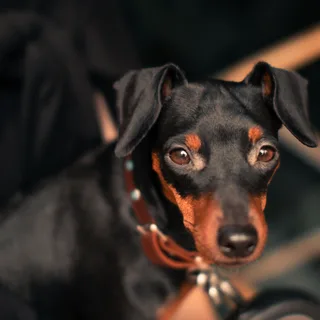
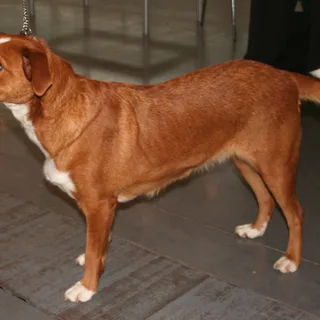
The Miniature Pinscher is a small dog with an almost square format, well proportioned, muscular and elegant. Its coat is short, smooth, shiny and well furnished. The head is elongated with a slight stop, the eyes are oval and dark, the ears fairly large and carried high, and the tail is natural in sabre or sickle. The accepted colours are red, from deer red to dark brown red, as well as black and tan.
Temperament
Temperament and personality
The Miniature Pinscher is an alert, loyal dog and very attached to its family. It is playful, affectionate and lively, with a good dose of confidence despite its small size. It enjoys family life, likes to take part in the daily life of its loved ones and retains a vigilant temperament that makes it an effective little watchdog.
Living together
Living with children and animals
On a daily basis, the Miniature Pinscher likes to move, play and go out regularly, while appreciating the comfort of the home. It adapts well to apartment living if its exercise and stimulation needs are met. It can be quite vocal and signal what intrigues it, but it generally tolerates visitors well once properly socialized. It does not tolerate long repeated absences well.
Training
Training and socialization
The education of the Miniature Pinscher benefits from being started early, with a consistent, dynamic and positive approach. Play is an excellent lever to capture its attention and maintain its motivation. A method that is too harsh or too authoritarian can make it shut down, whereas a clear framework, stable habits and short sessions give very good results.
Budget
Miniature Pinscher price & budget
The price of a Miniature Pinscher varies mainly depending on the lineage, the reputation of the breeding kennel, the seriousness of the selection and the health guarantees offered. A well-socialized puppy, identified and monitored logically costs more than a poorly documented offer.
View cost breakdownHealth
Health at a glance
The Miniature Pinscher is overall a robust dog that often enjoys good longevity. Its light build limits certain physical constraints, but the breed nevertheless presents a few orthopedic and ocular predispositions that justify careful monitoring, especially if one wants to preserve its mobility and comfort over time.
Prevention & watch pointsDiet
Feed it well
The Miniature Pinscher is not particularly difficult to feed, but its diet must remain of good quality and well balanced. Its small size should not lead to underestimating its needs in protein, digestibility and calorie control.
Our feeding adviceDid you know?
Anecdotes and popularity
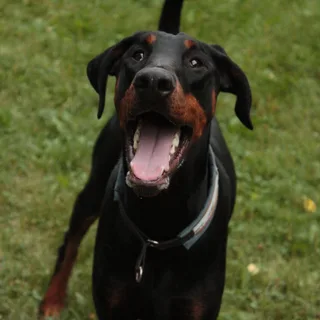
The Miniature Pinscher is also known as the Zwergpinscher and it is often mistakenly taken for a miniature Dobermann. In reality, it is a breed in its own right, old, selected to remain harmonious and athletic despite its small size.