Origins
Where does it come from?
The Petit chien hollandais de chasse au gibier d'eau, also known as the Kooikerhondje, is an ancient Dutch breed linked to duck decoys, where it was used to lure ducks toward traps thanks to its lively movements and its clearly visible white tail. The breed nearly disappeared before being revived in the 1940s by Baroness van Hardenbroek van Ammerstol, whose breeding work made it possible to rebuild a solid foundation. The FCI recognized the breed in 1990.
Appearance
What does it look like?
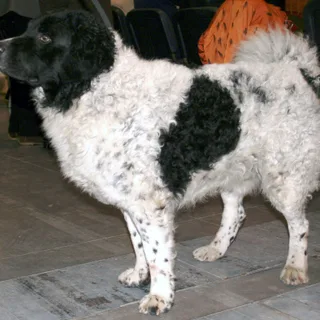
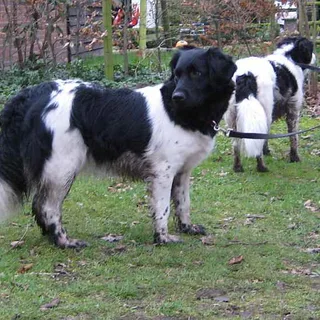
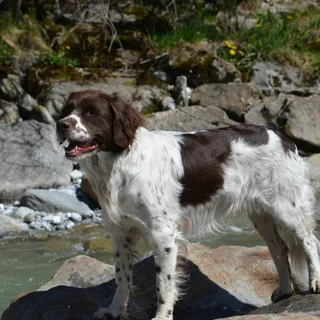
This medium-sized dog has a harmonious build and is almost inscribable in a square. Its white coat with red-orange markings is typical, with a medium-length coat lying close to the body, sometimes slightly wavy, and an undercoat that protects against moisture. The drop ears are furnished with fringes, ideally ending in black, and the feathered tail completes an elegant, sporty and well-proportioned silhouette.
Temperament
Temperament and personality
The Petit chien hollandais de chasse au gibier d'eau is a cheerful, loyal and pleasant dog to live with with those close to him. He is lively, willing and very active, with a good dose of confidence and determination at work. With the family, he is affectionate without being clingy and can be a little reserved towards strangers, which requires careful socialization.
Living together
Living with children and animals
On a daily basis, this breed needs regular activities to stay balanced. It enjoys long walks, scent games, retrieving exercises and activities that engage its body as well as its mind. It can live in the city if its exercise needs are truly met, but it thrives more in an environment offering space and frequent outings.
Training
Training and socialization
Education must start early and be based on positive, consistent methods motivated by reward. This dog learns well when it understands the meaning of the exercise and when it can channel its energy into useful work. Brutality must be avoided, as it may cause it to shut down or harm the relationship of trust. Recall, self-control and socialization are among the priorities.
Budget
Kooikerhondje price & budget
The purchase price varies mainly according to the rarity of the breed, the quality of the lineage, the health tests carried out on the breeding dogs and the seriousness of the socialization work. For a breed that is still uncommon, it is advisable to prioritize the quality of the breeding rather than an abnormally low offer.
View cost breakdownHealth
Health at a glance
The Petit chien hollandais de chasse au gibier d'eau is overall a sturdy dog, well equipped for outings in wet environments thanks to its double coat. Like many breeds with a relatively small population, it nevertheless deserves serious selection and careful preventive monitoring in order to limit the expression of certain hereditary or orthopedic conditions.
Prevention & watch pointsDiet
Feed it well
This breed needs a balanced, digestible, good-quality diet, adjusted to its age, weight and above all its activity level. A very active dog will not have the same needs as a companion animal that expends less energy.
Our feeding adviceDid you know?
Anecdotes and popularity
The Dutch name Kooikerhondje refers to the kooien, the traditional duck decoys of the Netherlands. The breed is also nicknamed Dutch decoy dog. One of its signatures is the presence of long black fringes at the tip of the ears, often called earrings, a detail highly appreciated in the standard.