Origins
Where does it come from?
The Russo-European Laika originates from northern Russia. Its ancestors are mainly the Cheremis and Zyrianskiy Laikas. After the Second World War, several regional varieties were brought together to form the current breed. A first official standard was approved in 1952, then the FCI definitively recognized the breed on 3 June 1980.
Appearance
What does it look like?
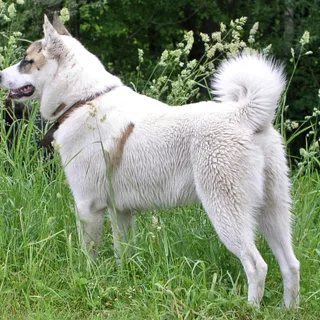
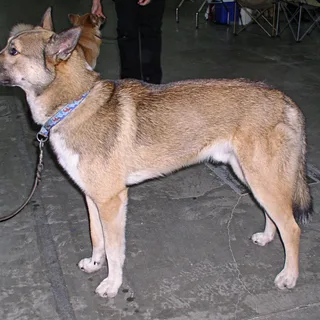
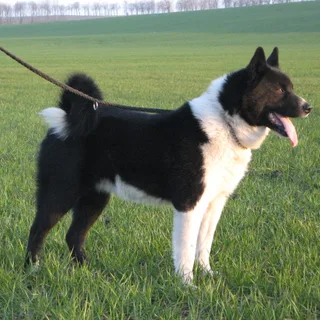
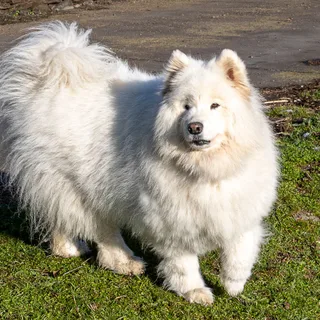
The Russo-European Laika is a medium-sized dog, robust, lean and harmonious, with well-developed musculature and a powerful bone structure. Its body fits almost into a square. The head is triangular, the ears are erect in a V, the oval eyes brown to dark brown express liveliness, and the tail is carried in a sickle or curled. The coat is straight and harsh, doubled with an abundant undercoat, with a black and white coat, black with white markings or white with black markings.
Temperament
Temperament and personality
The Russo-European Laika is a well-balanced, self-confident and lively dog. A versatile hunting dog, it has a powerful sense of smell and a naturally independent temperament. It is attached to its owner, often wary of strangers, and can be dominant if it is not properly supervised.
Living together
Living with children and animals
A worker by nature, the Russo-European Laika needs to expend energy every day through long walks and stimulating activities. It prefers wide open spaces to confined urban environments. Its hunting instinct is pronounced and living with other animals requires careful introductions and good socialization.
Training
Training and socialization
His training must be firm, consistent and respectful, without brutality. Positive reinforcement, rewards and encouragement yield better results than a power struggle. Socialization must start early, as must recall training, in order to channel his independence and his taste for chasing.
Budget
Russo-European Laika price & budget
The purchase price of the Russo-European Laika depends mainly on the seriousness of the breeding, the origin of the breeding dogs, the pedigree and the health monitoring offered. You must also anticipate the maintenance expenses of a sporty dog over time.
View cost breakdownHealth
Health at a glance
The Russo-European Laika is a hardy and generally robust dog. It tolerates cold climates well, but is more sensitive to high heat. The breed does not show a major predisposition to many diseases, but certain orthopedic conditions deserve particular vigilance.
Prevention & watch pointsDiet
Feed it well
The diet of the Russo-European Laika must support an active, muscular and enduring dog. It must be of good quality, easily digestible and adjusted to age, weight, activity level and season.
Our feeding adviceDid you know?
Anecdotes and popularity
The Russo-European Laika belongs to FCI group 5, that of Spitz-type and primitive-type dogs. A breed developed from several lines from northern Russia, it remains above all a working and hunting dog, appreciated for its hardiness and its ability to work in difficult conditions.