Origins
Where does it come from?
Originally from eastern Russia, the East Siberian Laika has long accompanied hunters of the taiga and the vast Siberian territories. Its ancestors include in particular the Yakut and Tungus dogs. A first standard was established at the beginning of the 20th century, but the breed was considered distinct only after the Second World War. The FCI recognized it definitively on 3 June 1980 and its current official standard was published on 13 October 2010.
Appearance
What does it look like?
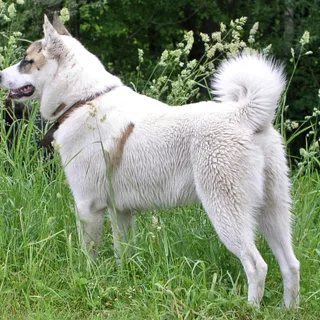
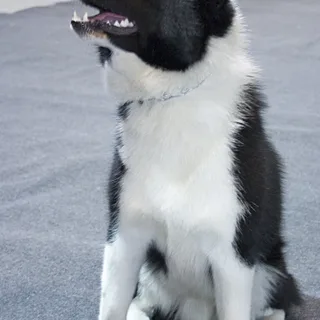
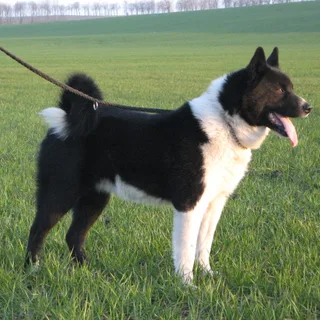
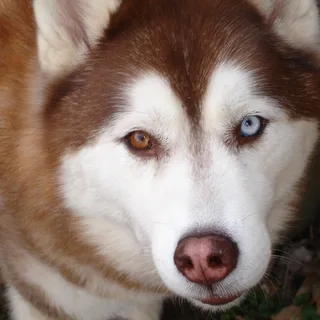
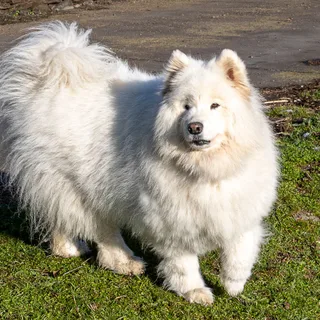
The East Siberian Laika is a medium-sized dog, powerful, compact and well-muscled, with a strong bone structure and a silhouette slightly inscribed in a rectangle. Its head is relatively large and wedge-shaped, its ears are erect in a V shape, its dark brown eyes display a frank and friendly expression, and its tail is carried curled or sickle-shaped over the back. Its coat is straight, harsh and combined with an abundant undercoat, fuller around the neck, shoulders and tail.
Temperament
Temperament and personality
The East Siberian Laika has a balanced temperament, independent and strongly marked by its hunting abilities. With its owner, it shows itself attached, gentle and reliable. It is generally friendly in everyday life, but remains wary of strangers and retains a well-present protective instinct.
Living together
Living with children and animals
This dog needs to stay active and stimulated every day. He enjoys long walks, outdoor activities and spacious environments. Not very attracted to apartment living, he thrives more in a house with a large garden and with an owner able to channel his independence.
Training
Training and socialization
The East Siberian Laika requires a firm, consistent education free of brutality. He learns better with positive reinforcement methods, play, and regular work. Early and careful socialization is important to manage his reserve toward strangers and his natural independence.
Budget
East Siberian Laika price & budget
The price of an East Siberian Laika varies depending on the lineage, the seriousness of the breeding, the screenings and the socialization. The maintenance budget (food, veterinary care, training) often exceeds the purchase price over time.
View cost breakdownHealth
Health at a glance
The East Siberian Laika is a resilient dog, generally robust and adapted to harsh climatic conditions. The breed is not known for accumulating many predispositions, but a few orthopedic and congenital points of vigilance must be monitored.
Prevention & watch pointsDiet
Feed it well
The diet of the East Siberian Laika must be adapted to its age, its size and above all to its level of physical activity. A good-quality, regular and well-measured diet helps support its endurance and muscle mass.
Our feeding adviceDid you know?
Anecdotes and popularity
Traditional hunting breed from the eastern regions of Russia, the East Siberian Laika was selected to work in difficult conditions and on large game. Its official recognition by the FCI is relatively recent on the scale of its working history.