Origins
Where does it come from?
The French Spaniel is an ancient pointing dog breed originating from France. It descends from the Oysel dogs already appreciated in the Middle Ages for their hunting qualities. Highly esteemed for centuries, it was then eclipsed by faster breeds such as the English Setter before being preserved thanks to the selective breeding work of enthusiasts, notably James de Connick, who established a first standard at the end of the 19th century. The breed then regained a recognized place in French and then international cynophilia.
Appearance
What does it look like?
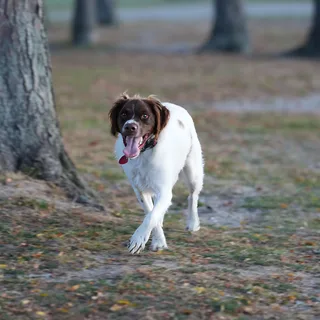
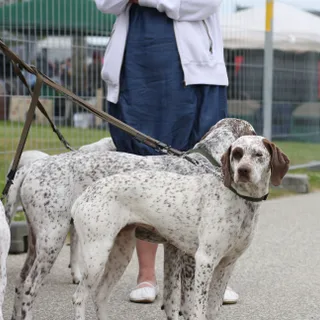
The French Spaniel is a medium-sized dog, harmonious, solid and elegant, of braccoid type. Its bone structure is strong without heaviness and its musculature gives it good endurance in the field. Its long, flat, silky and dense coat is most often white and brown, with more or less speckled markings. The ears are set back and furnished with fringes, while the expression, gentle and intelligent, contributes greatly to its charm.
Temperament
Temperament and personality
Gentle, balanced and measured, the French Spaniel is a pleasant companion to live with. He is affectionate with his family, generally very good with children and sociable with other dogs. A pointing dog at heart, he retains a strong hunting instinct, but without any notable guarding aggression. His temperament combines sensitivity, attentiveness to his owner and a desire to cooperate.
Living together
Living with children and animals
On a daily basis, the Epagneul Français needs movement, space and interactions. At home, he knows how to remain calm when he has expended enough energy, but he does not tolerate a life that is too sedentary. He enjoys long walks, outings in nature and all activities that engage his sense of smell. In a rural environment or in a house with a well-fenced garden, he generally finds a setting very well suited to his needs.
Training
Training and socialization
The French Spaniel is generally trained quite easily thanks to its intelligence, sensitivity and desire to please. Consistent, gentle and regular training gives very good results, especially if socialization starts young. Methods that are too harsh should be avoided, because this sensitive dog reacts badly to them. Work on recall, self-control and the basics of hunting must be carried out consistently to channel its natural abilities.
Budget
French Spaniel price & budget
The price of a French Spaniel depends mainly on the seriousness of the breeding kennel, the pedigree, the selection work, health tests and sometimes on whether it is oriented toward hunting or companionship. A coherent offer must be accompanied by a clear breeding framework, good health monitoring and transparent exchanges about the temperament and needs of the breed.
View cost breakdownHealth
Health at a glance
The French Spaniel is overall a hardy and resilient dog. Like many medium to large working breeds, it nevertheless deserves careful monitoring of the joints, skin and ears. Its active lifestyle often contributes to its good overall balance, provided that grooming, diet and veterinary prevention are properly followed.
Prevention & watch pointsDiet
Feed it well
The French Spaniel needs good-quality food, adapted to its age, its activity level and its body condition. A sporting dog, it benefits from a ration that is sufficiently digestible and energetic to support endurance without promoting overweight. Needs vary markedly between a very active subject during hunting season and a more moderate companion dog.
Our feeding adviceDid you know?
Anecdotes and popularity
The French Spaniel is one of the oldest French pointing dog breeds. Its modern survival owes much to a few breeders and enthusiasts who revived selective breeding at a time when the breed was in clear decline. Today it remains appreciated for its versatility as a hunting dog, family companion and partner for outdoor activities.