A menu for every age
Needs change over time
Puppy : A growth diet for a medium-sized puppy helps support development without excessive energy intake.
Adult : The ration must cover maintenance, activity and coat quality while avoiding weight gain.
Senior : With age, a more digestible formula and closer monitoring of weight and mobility become useful.
Which food?
Kibble, wet food, or home-cooked diet?
Good-quality kibble for a medium-sized dog generally provides a practical and suitable base. The formula must provide quality proteins, well-balanced fats and nutrients useful for the skin and coat, while remaining compatible with its actual activity level.
Amounts
How much should you give?
The daily amount depends on weight, age, neutering and activity. It is preferable to measure the ration, divide it into regular meals and adjust it according to changes in body condition rather than relying solely on appetite.
| Weight | Daily amount | Meals/day |
|---|---|---|
| 18 - 22 kg | 220 - 320 g | 2 |
| 22 - 26 kg | 260 - 380 g | 2 |
| 26 - 29 kg | 300 - 420 g | 2 |
Change
Managing the food transition
Any change in diet must be gradual over several days in order to limit digestive upsets. Temporarily mixing the old and the new food makes it possible to observe tolerance and adjust the transition speed if necessary.
Hydration
Water: do not overlook it
Clean, fresh water must remain available at all times. Hydration deserves special attention during hot periods, after exercise and in very active dogs or those living indoors with heating.
Little extras
Treats, in moderation
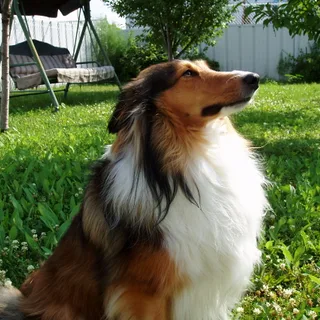
Treats must remain occasional and counted in the overall energy intake. They are useful for training the Rough Collie, but their accumulation quickly promotes overweight if daily portions are not adjusted.
Good habits
For a top-notch bowl
- Weigh the ration rather than estimating it by eye.
- Split the daily intake into regular meals.
- Slightly reduce the quantities if activity decreases.
- Monitor body condition despite the volume of the coat.
Never give
As with other dogs, it is necessary to avoid in particular chocolate, grapes, onions, garlic, avocado, alcohol, xylitol and cooked bones. These foods can cause severe digestive disorders, neurological, kidney or cardiac poisoning, or even life-threatening emergencies.