Origins
Where does it come from?
Although the breed was developed in Great Britain, its ancient origins are said to be French. It is said to have been introduced into the British Isles by the Duke of Newcastle, who started a breeding program on his estate at Clumber Park, in Nottinghamshire, from which the breed takes its name. The standard has evolved over time, notably towards a heavier build. The Clumber Spaniel bears number 109 in the FCI nomenclature and was definitively recognized on 9 December 1954 within group 8, devoted to retrievers and flushing dogs as well as water dogs.
Appearance
What does it look like?
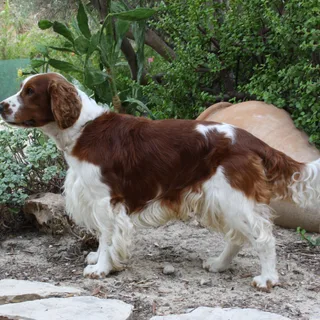
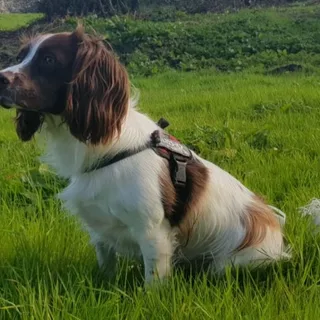
Of medium size but strongly built, the Clumber Spaniel has a powerful, robust, muscular body that is longer than it is tall. Its square, broad and massive head has a deep stop, a heavy muzzle, strong scissor-bite jaws and dark amber eyes with a gentle, thoughtful expression. Its large vine-leaf-shaped ears fall slightly forward. Its close, soft, abundant and straight coat forms fringes on the chest, limbs and tail. The coat is mainly white, with lemon or orange markings mainly present on the head. Despite its stature, its movement remains straight and fairly easy.
Temperament
Temperament and personality
A hunting and companion dog with a balanced temperament, the Clumber Spaniel is dignified, gentle, determined and self-confident. It has a very keen sense of smell and remarkable intelligence. Unflappable and discreet at work, it may be reserved with strangers without being aggressive. Affectionate with its family, playful and generally sociable, it gets along well with respectful children and other animals when it has been properly socialized.
Living together
Living with children and animals
Mainly selected as a game-flushing dog, he likes to follow scents and calmly explore his environment. He needs two daily outings and regular stimulation, without sudden or prolonged efforts in order to preserve his joints. A house close to nature suits him particularly well, but he can live in the city and adapt to an apartment if his needs for walks, scent work and companionship are met. Not much of a barker, he is not a deterrent guard dog, but his calm presence makes him a pleasant family companion.
Training
Training and socialization
Training must begin early, with priority learning of recall due to its hunting instinct and its excellent sense of smell. Intelligent and eager to please, the Clumber-Spaniel progresses with short, consistent and motivating sessions. A firm, patient and positive method is preferable: brutality would risk shutting down this sensitive dog. Early socialization with people, animals and varied environments helps to limit its natural reserve towards strangers.
Budget
Clumber Spaniel price & budget
The price of a Clumber Spaniel depends in particular on the quality of the lineage, the health screenings carried out, the reputation of the breeding kennel and the dog's intended purpose. The relative rarity of the breed can also influence availability and the price.
View cost breakdownHealth
Health at a glance
The Clumber-Spaniel is generally resilient and its coat protects it well from cold and bad weather. Its heavy build nevertheless exposes it to several osteoarticular disorders, while females may encounter difficulties during whelping. Serious selection, maintaining an appropriate weight and regular but moderate activity are essential.
Prevention & watch pointsDiet
Feed it well
Its diet must support its musculature while avoiding excess weight, particularly unfavorable for its joints. Intake should be adjusted according to age, weight, sterilization, and activity level.
Our feeding adviceDid you know?
Anecdotes and popularity
The name of the breed comes from Clumber Park, property of the Duke of Newcastle in Nottinghamshire. Despite a heavy appearance, this spaniel moves with straight and rather easy movements. The litter usually consists of 2 to 8 puppies. The breed, registered under number 109, has been recognized by the FCI since 1954.