Origins
Where does it come from?
The Field-Spaniel belongs to the old family of field spaniels. The breed developed in Great Britain at the end of the 19th century from crosses between low-legged Sussex Spaniels and Cocker Spaniels. Despite real hunting qualities, its numbers fell sharply at the beginning of the 20th century and then after the Second World War. Passionate breeders nevertheless made it possible to save it, and the breed was definitively recognized by the FCI in 1954.
Appearance
What does it look like?
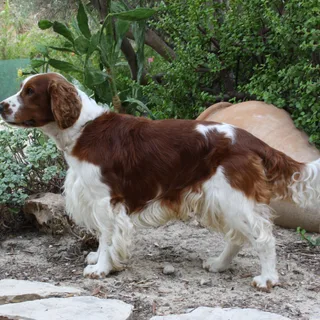
The Field Spaniel is a medium-sized dog, harmonious and built for endurance. Its body fits into a rectangle, with a length greater than the height at the withers. It has a noble and well-proportioned head, a long and lean muzzle, dark hazel eyes with a gentle and serious expression, as well as low-set and well-feathered ears. Its coat is long, shiny, silky and flat, with abundant fringes on the chest, under the body and on the back of the limbs.
Temperament
Temperament and personality
The Field Spaniel brings together highly appreciated qualities in a hunting dog: it is active, diligent, sensitive and attached to its owner. It is affectionate with its family, even-tempered on a daily basis and capable of fine autonomy without being distant. Its temperament combines docility, enthusiasm at work and moderate independence.
Living together
Living with children and animals
This dog needs a truly active life and does not cope well with an overly sedentary routine. It thrives more in the countryside or in a home able to offer it long outings, scent activities and regular access to natural spaces. Playful and energetic, it remains better suited to an available lifestyle than to a strictly urban life.
Training
Training and socialization
Like many hunting dogs, the Field-Spaniel must learn recall and the basics of obedience very early. Its sensitivity calls for gentle, consistent training without brutality. With understanding, consistency and measured firmness, it learns willingly thanks to its natural docility and its taste for work.
Budget
Field Spaniel price & budget
The Field-Spaniel remains a rare breed, which can limit the available supply and lengthen waiting times. The price depends mainly on the quality of the lineage, the seriousness of the breeding, the health tests carried out and more broadly on the rarity of the available puppies.
View cost breakdownHealth
Health at a glance
The Field Spaniel is overall an enduring and fairly resilient dog. Its coat provides it with useful protection against bad weather, but the breed has several hereditary predispositions that justify serious monitoring by a rigorous breeder and an attentive veterinarian.
Prevention & watch pointsDiet
Feed it well
The Field Spaniel needs a good-quality diet, adapted to its medium size, its activity level and its age. Its status as an enduring and dynamic dog justifies a balanced ration, sufficiently rich in digestible proteins and well adjusted to the actual energy expenditure.
Our feeding adviceDid you know?
Anecdotes and popularity
The Field-Spaniel is today a rare breed, although it nearly disappeared several times during the 20th century. It shares historical origins with other British spaniels, but stands out for its more low-profile profile, its endurance and its abilities as a game flusher and retriever.