Origins
Where does it come from?
The Braque de Burgos is a very old Spanish breed, reported as early as the beginning of the 17th century. Probably descended from native dogs from the Burgos region, it is thought to have contributed to the development of several European pointing breeds. The breed narrowly escaped extinction in the 1930s and 1940s, notably during the Spanish Civil War and then the Second World War. Passionate breeders, among them Don Manuel Izquierdo and Don Geardo Sardonil, took part in its preservation by producing quality litters. Still not widespread outside Spain, the Braque de Burgos was definitively recognized by the Fédération Cynologique Internationale on 12 November 1954 under number 90, in group 7 of pointing dogs.
Appearance
What does it look like?
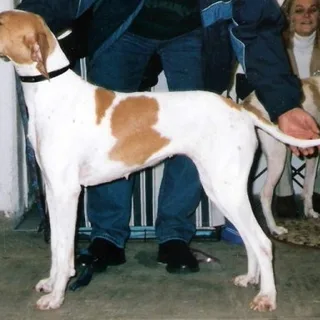
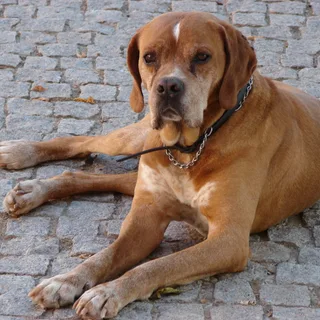
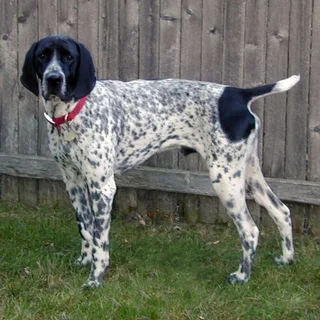
Large, powerful and agile pointing dog, the Braque de Burgos has a body that can be inscribed in a square. Its neck is strong and broad, its withers well defined, its back powerful and muscular, its croup solid and its chest broad and well let down. Its long, large and strong head has a developed, broad and domed skull, a slightly marked stop, a solid muzzle, well open nostrils and pendulous lips without being flabby. Its almond-shaped eyes, of medium size and hazel colour, express gentleness and sometimes a certain sadness. Its triangular ears are long, pendulous and supple. The tail, thick at the base, is set on moderately high. The coat is short, smooth, close and moderately thick. The coat combines white and liver in various speckled, roaned or flecked combinations.
Temperament
Temperament and personality
The Braque de Burgos has a balanced temperament. Calm, composed, confident and pleasant as a companion, it proves particularly effective in hunting. This versatile pointing dog works on furred game as well as feathered game, on varied terrain, and can also excel at retrieving. Its hunting instinct is very pronounced, while its protective instinct remains moderate.
Living together
Living with children and animals
On a daily basis, the Braque de Burgos needs availability, space and long outings. He is affectionate without being excessively demonstrative, generally calm at home when he has sufficiently spent his energy. His sociability with children, strangers and other animals is average and must be strengthened early. Not very suited to apartment living, he can nevertheless live in an urban environment if he has a large fenced garden and long, frequent daily walks. Built to cover long distances, ideally in nature, he enjoys endurance activities and games.
Training
Training and socialization
Intelligent, rather docile and with average obedience, the Braque de Burgos is not particularly difficult to train. Consistent handling combining gentleness and firmness makes it a good hunting and life companion. Early socialization, leash walking and above all learning a reliable recall are essential due to its strong hunting instinct. Short, regular and motivating sessions are preferable.
Budget
Burgos Pointer price & budget
The purchase price depends in particular on the reputation of the breeding kennel, the pedigree, compliance with the standard, the bloodline and the dog's intended purpose, companionship, hunting or showing. The rarity of the breed outside Spain can also influence availability.
View cost breakdownHealth
Health at a glance
Robust and hardy, the Braque de Burgos generally enjoys good health. Particular vigilance is nevertheless necessary for the skin, as the breed is predisposed to certain dermatological conditions, notably demodectic mange and vitiligo. Its long drooping ears must also be examined regularly, especially after outings.
Prevention & watch pointsDiet
Feed it well
The diet must cover the needs of a large, very active hunting dog while maintaining an athletic silhouette. The ration varies greatly depending on age, weight, season and intensity of work.
Our feeding adviceDid you know?
Anecdotes and popularity
The Braque de Burgos is also known by its Spanish name Perdiguero de Burgos. The FCI registers it under number 90 and definitively recognized it in 1954. A litter generally includes 5 to 10 puppies. Despite its age and its hunting qualities, the breed remains relatively rare outside Spain.