Longevity
Life expectancy
Its lifespan is generally between 11 and 14 years. A suitable diet, regular activity without excess during growth, and preventive veterinary monitoring help maintain its quality of life.
Build
A robust breed?
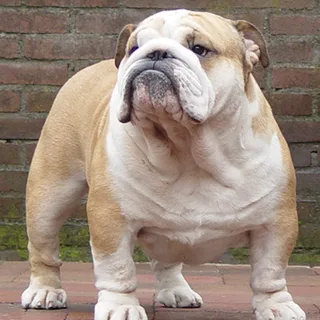
Its powerful build gives it good overall endurance, but this apparent robustness does not eliminate the need for joint screening. Its very short coat offers little protection against extreme temperatures and its body mass increases the strain on the hips and elbows.
Watch points
What to watch for
Particular attention must be paid to the quality of movement, the appearance of lameness, stiffness or pain, as well as to any unusual mass or swelling. A prompt veterinary check-up is recommended in the event of a persistent sign.
Hip dysplasia : Malformation of the coxofemoral joint that can cause pain, lameness, and osteoarthritis.
Elbow dysplasia : Developmental abnormality of the elbow likely to cause pain and early osteoarthritis.
Hernias : The breed may present different hernias, which require a veterinary evaluation and sometimes surgical correction.
Climate
Cold and heat tolerance
Its short coat provides little insulation from the cold and it must not stay outside for long in low temperatures. It also tolerates high heat poorly, especially during intense exertion: outings must then be scheduled during cool hours, with rest, shade and water available.
Weight
Tendency to gain weight
The ration must be adjusted to age, actual weight, activity and body condition. An athletic silhouette must be preserved without seeking excessive mass, which would put more strain on the joints. Treats must be included in the daily energy intake.
Daily life
Good habits to keep it healthy
- Have the hips and elbows of breeding dogs checked.
- Maintain a stable weight to protect the joints.
- Limit jumping and repetitive exertion during growth.
- Regularly inspect the skin, ears, and facial folds.
- Consult promptly in case of limping or persistent stiffness.
Vaccination
American Bulldog vaccines: vaccination schedule
Which vaccines for a American Bulldog? Like all cats, the American Bulldog receives essential vaccines from 8 weeks old: Typhus (panleukopenia) and Coryza. The kitten primary vaccination for American Bulldog is given in several injections 4 weeks apart, followed by a first booster at 1 year, even if it lives in an apartment. Depending on its lifestyle (outdoor access, multi-cat household, shows, travel), your veterinarian may complete the protocol with vaccines against Feline leukemia (FeLV), Rabies and Chlamydiosis.
| Vaccine | Primary series | First booster | Then | Who for? |
|---|---|---|---|---|
Typhus (panleukopenia)Core Feline panleukopenia (cat parvovirus) | 8 weeks · 12 weeks · 3 months | 1 year | every year | All pets |
CoryzaCore Feline herpesvirus and calicivirus | 8 weeks · 12 weeks · 3 months | 1 year | every year | All pets |
Feline leukemia (FeLV)Lifestyle-based Feline leukemia virus | 8 weeks · 12 weeks | 1 year | every year | Outdoor cats, cats living in a group or in a cattery |
RabiesLifestyle-based Rabies | 12 weeks | 1 year | every year | Mandatory for travel abroad, cat shows and most boarding kennels |
ChlamydiosisLifestyle-based Chlamydia felis (contagious conjunctivitis) | 8 weeks · 12 weeks | 1 year | every year | Cats living in groups, catteries, show cats |
Adult American Bulldog vaccine boosters are annual for cat flu and leukemia if it goes outdoors; for panleukopenia, a booster every three years is often sufficient after the first booster. Your veterinarian will adjust the schedule to your cat’s lifestyle.
Which boosters for your American Bulldog?
Enter your companion’s age: we list the vaccines to do now and the next boosters.
Adopting well
Adopting a healthy American Bulldog
Before breeding, it is advisable to have the hips and elbows of the breeding dogs evaluated and to ask the breeder for the screening results. Regular clinical examinations, growth monitoring and veterinary check-ups adapted to the bloodlines complete this prevention.
This information is provided for guidance only and does not replace a veterinarian’s advice. If you have any concerns about your pet’s health, consult a professional.