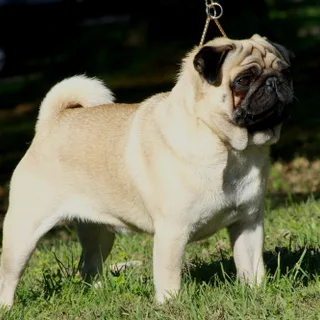
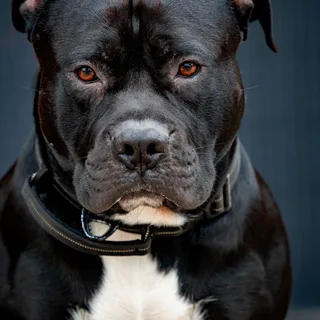
Longevity
Life expectancy
With a balanced diet, suitable activity, controlled weight and regular veterinary follow-up, this dog generally lives between 10 and 14 years.
Build
A robust breed?
Its compact build is solid and the breed enjoys generally rather good health. Its short face can however limit its breathing and its thermoregulation, while its exposed eyes are more vulnerable to trauma and irritation.
Watch points
What to watch for
Particular attention must be paid to the eyes, the quality of breathing, the skin and locomotion. Any unusual shortness of breath, red or painful eye, persistent itching or lameness justifies a veterinary consultation.
Eye conditions : Prominent eyes are exposed to irritation, trauma and corneal ulcers, which requires a prompt consultation in case of redness, pain or discharge.
Brachycephalic syndrome : The short muzzle can lead to snoring, exercise intolerance, breathing discomfort and difficulty regulating temperature.
Difficult births : The conformation of the puppies and the maternal pelvis can promote dystocia and make a cesarean section necessary.
Demodicosis : This parasitic skin condition can cause hair loss, dandruff and crusty lesions requiring a veterinary diagnosis.
Patellar luxation : This knee instability can cause a skipping gait or lameness and should be screened for in breeding dogs.
Climate
Cold and heat tolerance
Its short coat offers little protection from the cold and its brachycephalic morphology reduces its tolerance to heat. In winter, outings must remain adapted to low temperatures. In summer, cooler hours should be favored, intense efforts avoided, and shade and water provided at all times.
Weight
Tendency to gain weight
The ration must be adjusted to age, weight, neutering and activity level. Regular weighing and monitoring body condition help prevent overweight, which worsens breathing difficulties and puts more strain on the joints.
Daily life
Good habits to keep it healthy
- Gently clean the folds and monitor the skin.
- Regularly inspect the eyes and ears.
- Keep the nails at an appropriate length.
- Avoid intense exertion in hot weather.
- Have the eyes, heart, breathing and kneecaps checked every year.
Vaccination
Boston Terrier vaccines: vaccination schedule
Which vaccines for a Boston Terrier? Like all cats, the Boston Terrier receives essential vaccines from 8 weeks old: Typhus (panleukopenia) and Coryza. The kitten primary vaccination for Boston Terrier is given in several injections 4 weeks apart, followed by a first booster at 1 year, even if it lives in an apartment. Depending on its lifestyle (outdoor access, multi-cat household, shows, travel), your veterinarian may complete the protocol with vaccines against Feline leukemia (FeLV), Rabies and Chlamydiosis.
| Vaccine | Primary series | First booster | Then | Who for? |
|---|---|---|---|---|
Typhus (panleukopenia)Core Feline panleukopenia (cat parvovirus) | 8 weeks · 12 weeks · 3 months | 1 year | every year | All pets |
CoryzaCore Feline herpesvirus and calicivirus | 8 weeks · 12 weeks · 3 months | 1 year | every year | All pets |
Feline leukemia (FeLV)Lifestyle-based Feline leukemia virus | 8 weeks · 12 weeks | 1 year | every year | Outdoor cats, cats living in a group or in a cattery |
RabiesLifestyle-based Rabies | 12 weeks | 1 year | every year | Mandatory for travel abroad, cat shows and most boarding kennels |
ChlamydiosisLifestyle-based Chlamydia felis (contagious conjunctivitis) | 8 weeks · 12 weeks | 1 year | every year | Cats living in groups, catteries, show cats |
Adult Boston Terrier vaccine boosters are annual for cat flu and leukemia if it goes outdoors; for panleukopenia, a booster every three years is often sufficient after the first booster. Your veterinarian will adjust the schedule to your cat’s lifestyle.
Which boosters for your Boston Terrier?
Enter your companion’s age: we list the vaccines to do now and the next boosters.
Adopting well
Adopting a healthy Boston Terrier
Before breeding, it is relevant to check the patellas, the eyes, hearing and respiratory quality. The choice of breeding dogs able to breathe without discomfort and having sufficiently open nostrils helps to limit disorders linked to hypertype.
This information is provided for guidance only and does not replace a veterinarian’s advice. If you have any concerns about your pet’s health, consult a professional.