Origins
Where does it come from?
The Molosse d'Épire, or Hellenic Molossus of Epirus, belongs to the very ancient family of Balkan mountain dogs. Selected to protect herds from predators in north-western Greece, it has retained a massive type, great autonomy and a strong attachment to its territory. The breed remains rare outside Greece and is not a fashionable dog. In France, it only makes sense on large properties or alongside sheep farms.
Appearance
What does it look like?
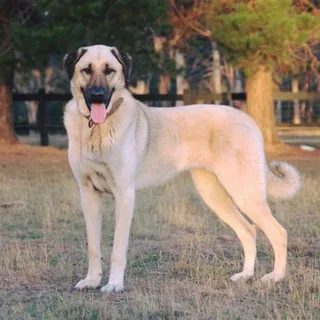
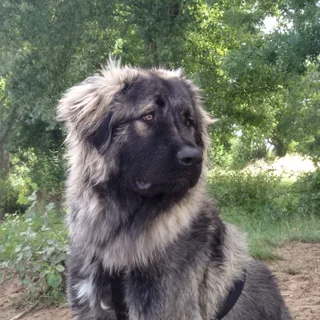
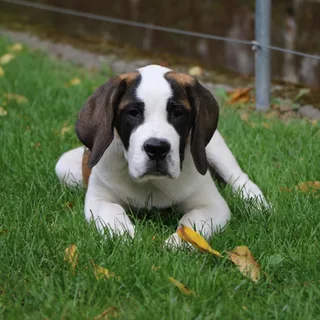
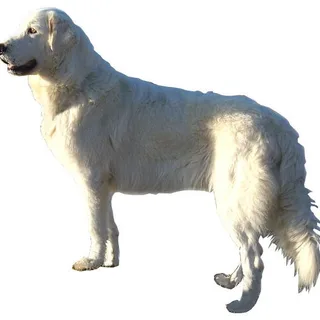
Giant, massive dog, with heavy bone structure and deep chest. The head is imposing, the stop pronounced, the lips slightly pendulous, the ears drooping. The coat is medium-long, fuller at the ruff and on the tail. Coat colors vary: fawn, gray, brindle, marked white, sometimes masked. The gait is powerful, more of a patroller than a sprinter.
Temperament
Temperament and personality
Calm, independent, very much a guard dog. He becomes attached to his family without being a dog that seeks constant contact. With the children of the household, he can be protective if he grew up with them. Strangers are assessed from a distance. Socialization is mandatory.
Living together
Living with children and animals
He patrols and alerts. He needs space, not an apartment. Useful exercise is walking and guarding. A young dog isolated or chained becomes a dangerous adult. An enclosed garden, high and solid, is a minimum.
Training
Training and socialization
Early, social, without confrontation. He is taught to accept visits, the leash and inhibition. This is not a bite sport dog. The owner must be experienced, calm and consistent.
Budget
Molosse d'Épire price & budget
A Molosse d'Épire puppy is often between 900 and 1 800 euros. The real cost is that of the space, the fencing and the food for a giant.
View cost breakdownHealth
Health at a glance
Rustic giant: growth, stomach, joints, eyelids. An appropriate diet and a non-slip floor limit a large part of the problems. Responsible breeding refuses subjects that are too soft and too heavy.
Prevention & watch pointsDiet
Feed it well
The Molosse d'Épire needs a complete, digestible diet adjusted to its age, its activity and its body condition. Protein quality and control of energy intake matter as much as the volume of the ration.
Our feeding adviceDid you know?
Anecdotes and popularity
Epirus is a land of mountains and transhumance, where these molossers were for a long time the shepherds' only "alarm system". It is linked to the great family of ancient molossers, without making it a legend. It must not be confused with the Anatolian Shepherd, more Turkish and often more lean.