Origins
Where does it come from?
The Spitz des Wisigoths is an ancient Swedish breed whose exact origins remain debated. Its modern development is attributed to Count Bjorn von Rosen and Director Zettersten, who contributed to its recognition in Sweden. Some hypotheses mention ancient links with dogs brought from England during the Viking era. Long used as a herding and livestock-guarding dog, it has established itself as a versatile rural helper.
Appearance
What does it look like?
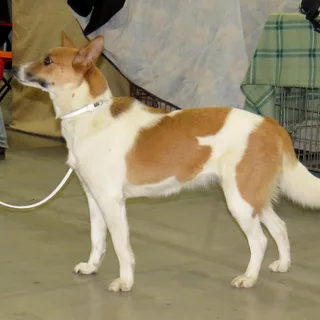
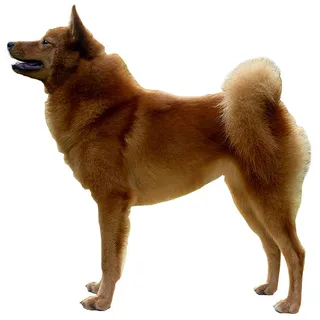
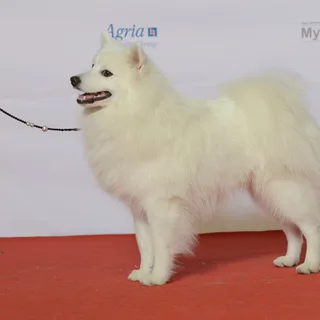
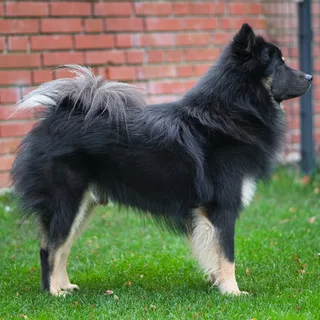
The Spitz des Wisigoths is a small to medium-sized dog, low on legs but sturdy, built in a rectangular format. Its powerful silhouette recalls that of a small rustic herding dog, with a rather long head, erect and pointed ears, dark brown eyes and an alert expression. Its topcoat is harsh, medium-long and lying close, with a dense undercoat that effectively protects it from cold and bad weather. The coat can be grey, greyish brown, greyish yellow, yellow or reddish brown, often with lighter markings.
Temperament
Temperament and personality
Lively, courageous and alert, the Spitz des Wisigoths has a balanced and pleasant temperament. He likes to take part in the life of his household and shows a real taste for work, activities and shared games. Affectionate with those close to him without being intrusive, he also remains a good alert dog thanks to his natural vigilance.
Living together
Living with children and animals
On a daily basis, the Spitz des Wisigoths needs activities and regular outings to stay comfortable in its paws. It shows itself to be enthusiastic, mobile and willing, with a natural tendency to watch over its environment and to signal what seems unusual to it. It adapts to different living settings, but thrives more when it has space and an active life alongside its owner.
Training
Training and socialization
His training benefits from being based on motivation, consistency and positive reinforcement. Intelligent and eager to please, he learns willingly when he understands what is expected of him and can feel useful. Calm and consistent handling, with measured firmness but never brutal, makes it possible to obtain a well-guided dog that is pleasant to live with.
Budget
Spitz des Wisigoths price & budget
The purchase price of the Spitz des Wisigoths varies depending on the lineage, the quality of the breeding and the availability of the breed. Beyond the initial cost, you should above all anticipate the ongoing expenses related to food, veterinary follow-up and general maintenance.
View cost breakdownHealth
Health at a glance
The Spitz des Wisigoths is considered a generally robust, hardy and resilient dog. Its dense double coat protects it well against cool climatic conditions, and the breed is not among the most fragile. As with any dog, responsible breeding, regular veterinary follow-up and good weight management remain essential to preserve this sturdiness.
Prevention & watch pointsDiet
Feed it well
The Spitz des Wisigoths needs a balanced, good-quality diet adjusted to its age, weight, activity level and physiological condition. A lively and active dog, it benefits from a stable, well-digested ration, regularly divided into portions.
Our feeding adviceDid you know?
Anecdotes and popularity
The Spitz des Wisigoths is also known under the names Swedish Vallhund and Västgötaspets. Its elongated silhouette and short limbs sometimes bring to mind a Corgi, but it does indeed belong to the group of Spitz-type and primitive-type dogs. Depending on the individuals, the tail can be naturally short or long.