Origins
Where does it come from?
The Chien de Saint Hubert is a very ancient breed originating from Belgium, long bred by the monks of the Abbey of Saint-Hubert in the Ardennes. Selected for hunting and tracking thanks to its exceptional sense of smell, it then enjoyed great success in England under the name Bloodhound, then in search and police services. The FCI recognized the breed definitively in 1960.
Appearance
What does it look like?
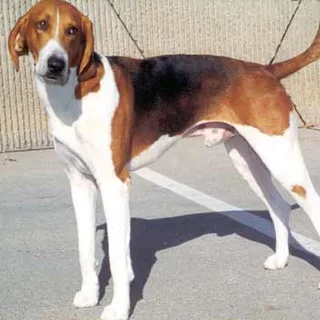
The Chien de Saint Hubert is a giant, massive and powerful dog, with a slightly elongated body, without excessive heaviness. It is distinguished by its noble and imposing head, its abundant and supple skin, its long drooping ears and its gentle expression. Its coat is short, dense and lying close, and its color can be black and tan, liver and tan or red in different shades.
Temperament
Temperament and personality
Gentle, very attached to its owner and generally sociable, the Chien de Saint Hubert hides beneath its impressive appearance a great sensitivity. It is a calm, patient and affectionate dog, appreciated in the family when it benefits from a consistent environment. It nevertheless retains a true scent hound temperament, with great autonomy in tracking work.
Living together
Living with children and animals
On a daily basis, he likes family life but needs space, regular outings and tracking or scent activities to stay balanced. He is not known for being aggressive and often shows tolerance with children and other animals. His voice is deep but he is generally not a big barker.
Training
Training and socialization
Its training must be firm, fair and patient, without a power struggle. Intelligent but sometimes stubborn, it learns well when sessions are consistent, calm and motivating. Early socialization, recall and scent work are particularly important in this sensitive breed.
Budget
Bloodhound price & budget
The purchase price of the Chien de Saint Hubert generally remains moderate for a dog of this size, but the overall budget must include food, upkeep, possible insurance and veterinary follow-up for a very large dog. The cost of ownership often matters more than the purchase price alone.
View cost breakdownHealth
Health at a glance
The Chien de Saint Hubert is generally robust, with a protective coat and good endurance, but its morphology and skin folds require regular vigilance. Like many large dogs, it may be exposed to certain joint and digestive disorders, as well as to eye and skin problems.
Prevention & watch pointsDiet
Feed it well
The Chien de Saint Hubert needs a complete, digestible diet adapted to large dogs, with particular attention to growth, muscle maintenance and weight control. The quality of the ration matters as much as the quantity in this heavy breed that is active outdoors.
Our feeding adviceDid you know?
Anecdotes and popularity
Known internationally as the Bloodhound, the Chien de Saint Hubert is considered one of the best tracking dogs in the world. Its sense of smell has been used both for hunting and in the search for missing persons and police work. Its name refers to the Abbey of Saint-Hubert, linked to the ancient history of the breed.