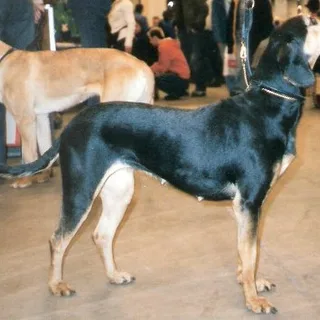
A menu for every age
Needs change over time
Puppy : Split meals and choose a growth diet suited to a medium-sized dog.
Adult : Adjust the ration to daily activity to maintain lean musculature and a stable weight.
Senior : Monitor weight, digestion and mobility more closely, with a diet that is easier to metabolize if needed.
Which food?
Kibble, wet food, or home-cooked diet?
Premium kibble for an adult, medium-sized and active dog constitutes a relevant base. Depending on the individual profile, a wet or mixed diet may also be suitable if it remains well balanced and adjusted to energy expenditure.
Amounts
How much should you give?
The daily ration must be adjusted according to actual weight, age, sterilization, the season and above all the level of activity. A moderate companion dog will not have the same needs as an individual used for hunting or for long regular outings.
| Weight | Daily amount | Meals/day |
|---|---|---|
| 15 - 16 kg | 278 - 381 g | 2 |
| 16 - 17 kg | 294 - 403 g | 2 |
| 17 - 18 kg | 310 - 425 g | 2 |
Change
Managing the food transition
Any change in diet must be gradual over several days in order to limit digestive upsets. A slow transition also makes it possible to check good tolerance of the new diet and changes in body condition.
Hydration
Water: do not overlook it
Clean, fresh water must remain available at all times. Hydration deserves particular attention after exertion, when traveling and during warmer periods, even in a dog that is rather resistant to cold.
Little extras
Treats, in moderation
Treats can be useful for training and recall, provided they remain moderate and are counted in the daily intake. It is better to favor small, simple and digestible rewards rather than extras that are too fatty.
Good habits
For a top-notch bowl
- Weigh the ration rather than pouring it in by guesswork.
- Split meals into at least two servings per day.
- Adjust the energy intake to hunting periods or times of reduced activity.
- Introduce any new food gradually.
Never give
As with other dogs, you should avoid in particular chocolate, grapes, raisins, onion, garlic, alcohol, xylitol, cooked bones and very fatty foods, as they can cause severe digestive, neurological or metabolic disorders that are sometimes serious.