---
title: "Large Münsterländer - Health and diseases | Pedibase"
description: "Lifespan (12-14 years), common diseases, vaccines and vaccination schedule, and prevention tips for the Large Münsterländer: the complete health guide."
canonical_url: "https://www.pedibase.com/en/dog-breed/large-munsterlander/health"
meta:
"og:description": "Lifespan (12-14 years), common diseases, vaccines and vaccination schedule, and prevention tips for the Large Münsterländer: the complete health guide."
"og:image": "https://www.pedibase.com/_img/rs:fill:1200:630/el:1/q:80/f:jpg/plain/s3://media-pedibase/public/7873/grand-epagneul-de-munster-4.jpg"
"og:image:alt": "Dog and cat breeders near you"
"og:image:height": "630"
"og:image:width": "1200"
"og:title": "Large Münsterländer - Health and diseases"
"twitter:description": "Lifespan (12-14 years), common diseases, vaccines and vaccination schedule, and prevention tips for the Large Münsterländer: the complete health guide."
"twitter:image": "https://www.pedibase.com/_img/rs:fill:1200:630/el:1/q:80/f:jpg/plain/s3://media-pedibase/public/7873/grand-epagneul-de-munster-4.jpg"
"twitter:title": "Large Münsterländer - Health and diseases"
---
> Index of every page on this site: [llms.txt](https://www.pedibase.com/llms.txt)
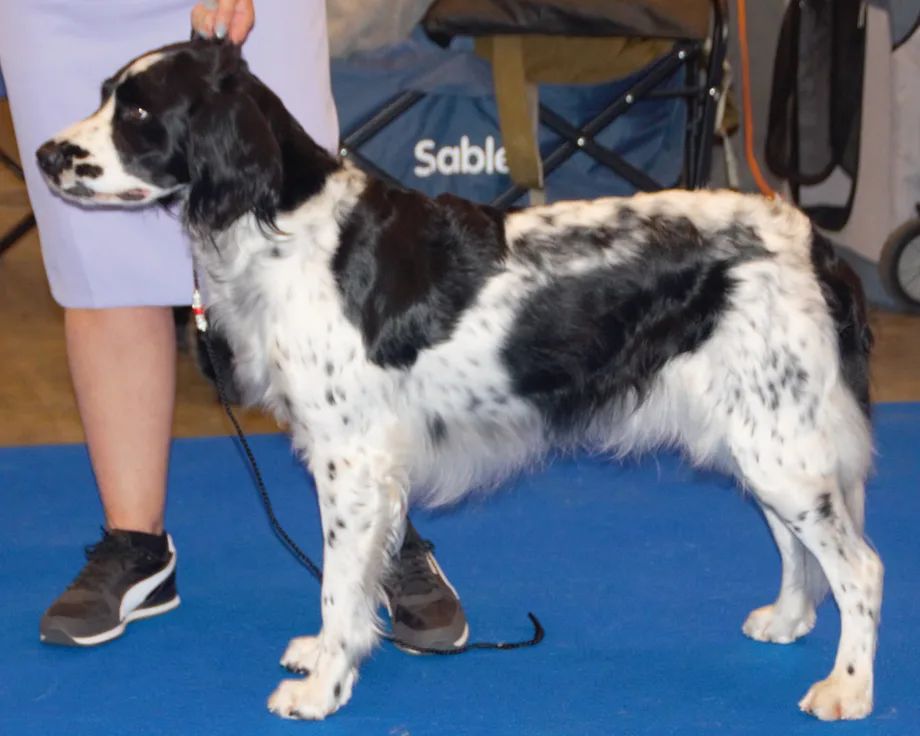
+4
Health
# The Large Münsterländer's health
Germany
The Grand Münsterländer is overall a rather robust dog, with good general resistance. The breed is not among the most fragile, but it deserves serious monitoring like any large active dog, particularly from an orthopedic and ophthalmological standpoint.
Longevity
## Life expectancy
With a life expectancy generally between 12 and 14 years, the Grand Münsterländer often enjoys a good longevity for a dog of this size. This lifespan depends greatly on the quality of the breeding, physical activity, diet and veterinary follow-up.
Constitution
## Is this a robust breed?
The breed shows good overall robustness and tolerates an active outdoor life well. This sturdiness does not exempt one from vigilance regarding the joints, eyes and heart, especially in dogs intended for sustained effort.
Things to watch for
## What to look out for
Even though it is generally robust, the Large Münsterländer benefits from preventive monitoring, with particular attention paid to locomotion, the quality of vision, the condition of the skin and recovery after exertion.
- Hip dysplasia: a joint malformation that can lead to locomotor discomfort, pain, and long-term osteoarthritis.
- Elbow dysplasia: a joint development disorder to monitor in this large active dog, with possible lameness.
- Cataract: an opacification of the lens that can progressively impair vision.
- Entropion: an inward rolling of the eyelid that can irritate the eye and require management.
- Ichthyosis: a hereditary skin condition responsible for keratinization abnormalities and skin irritation.
- Aortic stenosis: a more occasional heart condition, but to be taken seriously when monitoring bloodlines.
- Cancer: as in many breeds, certain tumor pathologies may appear with age and justify regular monitoring.
- Osteochondrosis of the shoulder and elbow: a growth-related osteoarticular disorder that can affect young developing dogs.
Climate
## Tolerance to cold and heat
The Large Münsterländer adapts correctly to cold as well as to moderate heat, without being extreme in one direction or the other. Its long coat protects it well outdoors, but intense efforts must be adjusted during hot periods and access to shade as well as to water must be constant.
Weight
## Prone to weight gain
Weight gain is not the breed’s main weak point, but a lack of exercise or a poorly adjusted ration can quickly impair its physical condition. Regular monitoring of body shape and stamina is useful in this sporty dog.
Everyday care
## Good habits to keep your pet healthy
- Monitor gait regularly, especially after sustained exertion.
- Have the eyes and joints checked in dogs intended for work.
- Maintain an ideal weight to limit the load on the joints.
- Plan regular veterinary follow-up, including at senior age.
Vaccination
## Large Münsterländer vaccinations: schedule
Which vaccines does a Large Münsterländer need? Like all dogs, Large Münsterländers should receive their core vaccines from 8 weeks of age: CHPPi (core vaccine) and Leptospirosis. Puppies receive their initial Large Münsterländer vaccinations in several shots spaced 4 weeks apart, followed by a first booster at 1 year. Depending on their lifestyle (hunting, hiking, boarding, travel, region), your veterinarian may add vaccines against Rabies, Kennel cough, Piroplasmosis, Lyme disease and Leishmaniasis.
| Vaccine | Primary vaccination | First booster | Then | For whom? |
| --- | --- | --- | --- | --- |
| CHPPi (core vaccine)Core Distemper, Rubarth hepatitis, parvovirosis and parainfluenza | 8 weeks · 12 weeks · 3 months | 1 year | every year | All animals |
| LeptospirosisCore Leptospirosis (bacterium transmitted by rodent urine and stagnant water) | 8 weeks · 12 weeks | 1 year | every year | All animals |
| RabiesDepending on lifestyle Rabies | 12 weeks | 1 year | every year | Mandatory for travel abroad, categorized dogs, most boarding kennels and shows |
| Kennel coughDepending on lifestyle Bordetella bronchiseptica and parainfluenza | 8 weeks | 1 year | every year | Dogs attending boarding kennels, daycares, dog clubs and shows |
| PiroplasmosisDepending on lifestyle Tick-borne babesiosis | 5 months · 6 months | 1 year | every year | Hunting dogs, dogs living in rural or wooded areas, dogs highly exposed to ticks |
| Lyme diseaseDepending on lifestyle Tick-borne borreliosis | 12 weeks · 3 months | 1 year | every year | Hiking dogs, hunting dogs, forest areas of the East and the Center |
| LeishmaniasisDepending on lifestyle Leishmaniasis transmitted by sandflies | 6 months | 1 year and 6 months | every year | Dogs living or staying in the South of France, Corsica and the Mediterranean basin |
Adult Large Münsterländer booster shots are given annually for leptospirosis and rabies. For distemper, hepatitis, and parvovirus, a booster every three years is often enough after the first booster. Your veterinarian will tailor the schedule to your dog's actual risk.
Which boosters does your Large Münsterländer need?
Enter your companion's age to see which vaccines are due now and when the next boosters are needed.
[Plan booster shots](https://www.pedibase.com/en/dog-and-cat-vaccination-schedule?breed=large-munsterlander)
Choosing well
## Adopting a healthy Large Münsterländer
A serious breeder should ideally monitor the hips, elbows, eyes and heart, with regular veterinary check-ups and, depending on the lines, appropriate additional examinations. A routine clinical and blood check-up also helps to follow this active dog over time.
This information is for guidance only and doesn't replace advice from a veterinarian. If you have any concerns about your pet's health, consult a professional.
## The best prevention starts with a good breeder
Choose a breeder who screens their breeding animals for inherited conditions. We'll help you find one.
[Find a breeder](https://www.pedibase.com/en/breeders-of-large-munsterlander)
## Discover other breeds
[Small Münsterländer
](https://www.pedibase.com/en/dog-breed/small-munsterlander)
[German Shorthaired Pointer
](https://www.pedibase.com/en/dog-breed/german-shorthaired-pointer)
[German Wirehaired Pointer
](https://www.pedibase.com/en/dog-breed/german-wirehaired-pointer)
[Weimaraner
](https://www.pedibase.com/en/dog-breed/weimaraner)
[German Longhaired Pointer
](https://www.pedibase.com/en/dog-breed/german-longhaired-pointer)
```json
{"@context":"https://schema.org","@graph":[{"@id":"https://www.pedibase.com/#website","@type":"WebSite","description":"Find dog and cat breeders near you. France's leading breeder directory, with an interactive map, breed information, and verified reviews.","inLanguage":"en","name":"Pedibase","url":"https://www.pedibase.com","potentialAction":[{"@type":"SearchAction","target":{"@type":"EntryPoint","urlTemplate":"https://www.pedibase.com/en/search?q={search_term_string}"},"query-input":"required name=search_term_string"}],"publisher":{"@id":"https://www.pedibase.com/#identity"},"translationOfWork":{"@id":"https://www.pedibase.com/#website"}},{"@id":"https://www.pedibase.com/en/dog-breed/large-munsterlander/health#webpage","@type":"WebPage","description":"Lifespan (12-14 years), common diseases, vaccines and vaccination schedule, and prevention tips for the Large Münsterländer: the complete health guide.","name":"Large Münsterländer - Health and diseases","url":"https://www.pedibase.com/en/dog-breed/large-munsterlander/health","breadcrumb":{"@id":"https://www.pedibase.com/en/dog-breed/large-munsterlander/health#breadcrumb"},"isPartOf":{"@id":"https://www.pedibase.com/en#website"},"potentialAction":[{"@type":"ReadAction","target":["https://www.pedibase.com/en/dog-breed/large-munsterlander/health"]}],"primaryImageOfPage":{"@type":"ImageObject","url":"https://www.pedibase.com/_img/rs:fill:1200:630/el:1/q:80/f:jpg/plain/s3://media-pedibase/public/7873/grand-epagneul-de-munster-4.jpg","width":1200,"height":630,"inLanguage":"en","contentUrl":"https://www.pedibase.com/_img/rs:fill:1200:630/el:1/q:80/f:jpg/plain/s3://media-pedibase/public/7873/grand-epagneul-de-munster-4.jpg"}},{"@id":"https://www.pedibase.com/#identity","@type":"Organization","description":"Pedibase is a free directory of dog and cat breeders that helps prospective owners find a registered breeder near them.","email":"contact@pedibase.com","name":"Pedibase","url":"https://www.pedibase.com/","contactPoint":{"@type":"ContactPoint","contactType":"customer support","email":"contact@pedibase.com"},"logo":{"@id":"https://www.pedibase.com/#logo"},"parentOrganization":{"@type":"Organization","name":"Aurion","address":{"@type":"PostalAddress","streetAddress":"1 rue Pasteur","postalCode":"72000","addressLocality":"Le Mans","addressCountry":"FR"}},"sameAs":["https://www.facebook.com/pedibase","https://www.instagram.com/pedibase_app"]},{"@id":"https://www.pedibase.com/en/dog-breed/large-munsterlander/health#breadcrumb","@type":"BreadcrumbList","itemListElement":[{"@type":"ListItem","name":"Home","item":"https://www.pedibase.com/en","position":1},{"@type":"ListItem","name":"Dogs","item":"https://www.pedibase.com/en/dog-breeds","position":2},{"@type":"ListItem","name":"Large Münsterländer","item":"https://www.pedibase.com/en/dog-breed/large-munsterlander","position":3},{"@type":"ListItem","name":"Health","position":4}]},{"@id":"https://www.pedibase.com/#logo","@type":"ImageObject","caption":"Pedibase","contentUrl":"https://www.pedibase.com/logo.svg","inLanguage":"en","url":"https://www.pedibase.com/logo.svg"}]}
```