---
title: "Ragdoll - Health and diseases | Pedibase"
description: "Lifespan (12-17 years), common diseases, vaccines and vaccination schedule, and prevention tips for the Ragdoll: the complete health guide."
canonical_url: "https://www.pedibase.com/en/cat-breed/ragdoll/health"
meta:
"og:description": "Lifespan (12-17 years), common diseases, vaccines and vaccination schedule, and prevention tips for the Ragdoll: the complete health guide."
"og:image": "https://www.pedibase.com/_img/rs:fill:1200:630/el:1/q:80/f:jpg/plain/s3://media-pedibase/public/4532/pexels-photo-37252511.jpeg"
"og:image:alt": "Dog and cat breeders near you"
"og:image:height": "630"
"og:image:width": "1200"
"og:title": "Ragdoll - Health and diseases"
"twitter:description": "Lifespan (12-17 years), common diseases, vaccines and vaccination schedule, and prevention tips for the Ragdoll: the complete health guide."
"twitter:image": "https://www.pedibase.com/_img/rs:fill:1200:630/el:1/q:80/f:jpg/plain/s3://media-pedibase/public/4532/pexels-photo-37252511.jpeg"
"twitter:title": "Ragdoll - Health and diseases"
---
> Index of every page on this site: [llms.txt](https://www.pedibase.com/llms.txt)
+10
Health
# The Ragdoll's health
United States
The Ragdoll generally has fairly robust health, but like many selected breeds, it deserves careful monitoring. Its imposing morphology, its lifestyle often very indoor, and certain hereditary predispositions justify regular prevention, well-controlled weight, and a serious breeding choice with appropriate screenings.
Longevity
## Life expectancy
With good living conditions, a balanced diet and regular veterinary follow-up, the Ragdoll often lives between 12 and 17 years. Longevity varies depending on the lineage, neutering status, the quality of the diet, activity level and how early any potential cardiac or kidney problems are managed.
Constitution
## Is this a robust breed?
The Ragdoll is rather robust without being a rustic breed in the strict sense. Its overall balance is good, but the impact of overweight, a sedentary lifestyle and hereditary conditions observed in certain lines should not be underestimated. Rigorous selection and a well-supervised lifestyle clearly improve its quality of life.
Things to watch for
## What to look out for
Vigilance must mainly focus on screening for hereditary conditions known in the breed, on cardiovascular and renal monitoring, as well as on checking body condition. As the Ragdoll is often not very adventurous and relatively calm, signs of discomfort can be subtle and deserve regular observation at home.
- Hypertrophic cardiomyopathy: Heart condition known in the breed, which can progress discreetly before causing heart failure, rhythm disorders, or exercise intolerance.
- Polycystic kidney disease: Hereditary kidney disease characterized by the formation of cysts in the kidneys, with a risk of progression to kidney failure.
- Overweight: An indoor lifestyle and a calm temperament promote weight gain if the diet is too rich or if daily activity is insufficient.
Climate
## Tolerance to cold and heat
Thanks to its semi-long coat, the Ragdoll tolerates fairly well temperate to cool environments, but above all appreciates a stable indoor environment. High heat should be anticipated with shade, fresh water and well-ventilated rooms, because a large, not very active cat can quickly suffer from thermal discomfort in summer.
Weight
## Prone to weight gain
The Ragdoll can gain weight if it lives exclusively indoors and expends little energy. Maintaining a proper silhouette relies on a well-measured ration, quality foods rich in protein, daily play, and regular weight monitoring to adjust intake before excess weight sets in.
Everyday care
## Good habits to keep your pet healthy
- Monitor weight and body shape every month.
- Schedule an annual veterinary check-up, then more frequently with age.
- Ask for cardiac and renal screening results for the bloodlines when purchasing.
- Brush the coat regularly to limit knots and hairballs.
Vaccination
## Ragdoll vaccinations: schedule
Which vaccines does a Ragdoll need? Like all cats, Ragdolls should receive their core vaccines from 8 weeks of age: Typhus (panleukopenia) and Coryza. Kittens receive their initial Ragdoll vaccinations in several shots spaced 4 weeks apart, followed by a first booster at 1 year, even if they live indoors. Depending on their lifestyle (outdoor access, living with other cats, shows, travel), your veterinarian may add vaccines against Feline leukemia (FeLV), Rabies and Chlamydiosis.
| Vaccine | Primary vaccination | First booster | Then | For whom? |
| --- | --- | --- | --- | --- |
| Typhus (panleukopenia)Core Feline panleukopenia (cat parvovirus) | 8 weeks · 12 weeks · 3 months | 1 year | every year | All animals |
| CoryzaCore Feline herpesvirus and calicivirus | 8 weeks · 12 weeks · 3 months | 1 year | every year | All animals |
| Feline leukemia (FeLV)Depending on lifestyle Feline leukemia virus | 8 weeks · 12 weeks | 1 year | every year | Outdoor cats, cats living in a group or in a cattery |
| RabiesDepending on lifestyle Rabies | 12 weeks | 1 year | every year | Mandatory for travel abroad, cat shows and most boarding kennels |
| ChlamydiosisDepending on lifestyle Chlamydia felis (contagious conjunctivitis) | 8 weeks · 12 weeks | 1 year | every year | Cats living in groups, catteries, show cats |
Adult Ragdoll booster shots are given annually for feline herpesvirus and feline leukemia if your cat goes outdoors. For feline panleukopenia, a booster every three years is often enough after the first booster. Your veterinarian will tailor the schedule to your cat's lifestyle.
Which boosters does your Ragdoll need?
Enter your companion's age to see which vaccines are due now and when the next boosters are needed.
[Plan booster shots](https://www.pedibase.com/en/dog-and-cat-vaccination-schedule?breed=ragdoll)
Choosing well
## Adopting a healthy Ragdoll
It is advisable to favor breeding cats tested for hypertrophic cardiomyopathy and monitored for kidney health depending on the lines. An annual clinical examination, supplemented if necessary by an in-depth cardiac auscultation, an ultrasound, a blood or urine work-up depending on age and context, helps to detect the most important problems early.
This information is for guidance only and doesn't replace advice from a veterinarian. If you have any concerns about your pet's health, consult a professional.
## The best prevention starts with a good breeder
Choose a breeder who screens their breeding animals for inherited conditions. We'll help you find one.
[Find a breeder](https://www.pedibase.com/en/breeders-of-ragdoll)
## Compare Ragdoll with other breeds
- [Ragdoll vs. Birman](https://www.pedibase.com/en/compare/ragdoll-vs-birman)
## Discover other breeds
[Maine Coon
](https://www.pedibase.com/en/cat-breed/maine-coon)
[Norwegian Forest Cat
](https://www.pedibase.com/en/cat-breed/norwegian-forest-cat)
[Siberian
](https://www.pedibase.com/en/cat-breed/siberian)
[Birman
](https://www.pedibase.com/en/cat-breed/birman)
[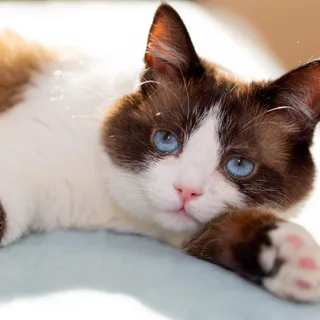Snowshoe
](https://www.pedibase.com/en/cat-breed/snowshoe)
```json
{"@context":"https://schema.org","@graph":[{"@id":"https://www.pedibase.com/#website","@type":"WebSite","description":"Find dog and cat breeders near you. France's leading breeder directory, with an interactive map, breed information, and verified reviews.","inLanguage":"en","name":"Pedibase","url":"https://www.pedibase.com","potentialAction":[{"@type":"SearchAction","target":{"@type":"EntryPoint","urlTemplate":"https://www.pedibase.com/en/search?q={search_term_string}"},"query-input":"required name=search_term_string"}],"publisher":{"@id":"https://www.pedibase.com/#identity"},"translationOfWork":{"@id":"https://www.pedibase.com/#website"}},{"@id":"https://www.pedibase.com/en/cat-breed/ragdoll/health#webpage","@type":"WebPage","description":"Lifespan (12-17 years), common diseases, vaccines and vaccination schedule, and prevention tips for the Ragdoll: the complete health guide.","name":"Ragdoll - Health and diseases","url":"https://www.pedibase.com/en/cat-breed/ragdoll/health","breadcrumb":{"@id":"https://www.pedibase.com/en/cat-breed/ragdoll/health#breadcrumb"},"isPartOf":{"@id":"https://www.pedibase.com/en#website"},"potentialAction":[{"@type":"ReadAction","target":["https://www.pedibase.com/en/cat-breed/ragdoll/health"]}],"primaryImageOfPage":{"@type":"ImageObject","url":"https://www.pedibase.com/_img/rs:fill:1200:630/el:1/q:80/f:jpg/plain/s3://media-pedibase/public/4532/pexels-photo-37252511.jpeg","width":1200,"height":630,"inLanguage":"en","contentUrl":"https://www.pedibase.com/_img/rs:fill:1200:630/el:1/q:80/f:jpg/plain/s3://media-pedibase/public/4532/pexels-photo-37252511.jpeg"}},{"@id":"https://www.pedibase.com/#identity","@type":"Organization","description":"Pedibase is a free directory of dog and cat breeders that helps prospective owners find a registered breeder near them.","email":"contact@pedibase.com","name":"Pedibase","url":"https://www.pedibase.com/","contactPoint":{"@type":"ContactPoint","contactType":"customer support","email":"contact@pedibase.com"},"logo":{"@id":"https://www.pedibase.com/#logo"},"parentOrganization":{"@type":"Organization","name":"Aurion","address":{"@type":"PostalAddress","streetAddress":"1 rue Pasteur","postalCode":"72000","addressLocality":"Le Mans","addressCountry":"FR"}},"sameAs":["https://www.facebook.com/pedibase","https://www.instagram.com/pedibase_app"]},{"@id":"https://www.pedibase.com/en/cat-breed/ragdoll/health#breadcrumb","@type":"BreadcrumbList","itemListElement":[{"@type":"ListItem","name":"Home","item":"https://www.pedibase.com/en","position":1},{"@type":"ListItem","name":"Cats","item":"https://www.pedibase.com/en/cat-breeds","position":2},{"@type":"ListItem","name":"Ragdoll","item":"https://www.pedibase.com/en/cat-breed/ragdoll","position":3},{"@type":"ListItem","name":"Health","position":4}]},{"@id":"https://www.pedibase.com/#logo","@type":"ImageObject","caption":"Pedibase","contentUrl":"https://www.pedibase.com/logo.svg","inLanguage":"en","url":"https://www.pedibase.com/logo.svg"}]}
```