---
title: "Ceylan - temperament, price, health, breeders | Pedibase"
description: "Everything to know about the Ceylan (Sri Lanka): temperament, size, health, lifespan of 12-16 years, feeding, price, and verified breeders."
canonical_url: "https://www.pedibase.com/en/cat-breed/ceylan"
meta:
"og:description": "Everything to know about the Ceylan (Sri Lanka): temperament, size, health, lifespan of 12-16 years, feeding, price, and verified breeders."
"og:image": "https://www.pedibase.com/_img/rs:fill:1200:630/el:1/q:80/f:jpg/plain/s3://media-pedibase/public/9551/ceylan.jpg"
"og:image:alt": "Dog and cat breeders near you"
"og:image:height": "630"
"og:image:width": "1200"
"og:title": "Ceylan - temperament, price, health, breeders"
"twitter:description": "Everything to know about the Ceylan (Sri Lanka): temperament, size, health, lifespan of 12-16 years, feeding, price, and verified breeders."
"twitter:image": "https://www.pedibase.com/_img/rs:fill:1200:630/el:1/q:80/f:jpg/plain/s3://media-pedibase/public/9551/ceylan.jpg"
"twitter:title": "Ceylan - temperament, price, health, breeders"
---
> Index of every page on this site: [llms.txt](https://www.pedibase.com/llms.txt)
+3
Cats
# The Ceylan: temperament, price, health, and breeders
Sri Lanka
A rare, lively and affectionate cat, appreciated for its sociability and natural elegance.
Size MediumLife expectancy 12–16 yearsBudget ≈ €65/monthKitten €1,000 – €2,500
No breeders yet — alert me [ Compare with other breeds](https://www.pedibase.com/en/compare-cat-breeds?races=ceylan)
The right choice?
## Is this breed right for you?
[Which cat is right for you?](https://www.pedibase.com/en/choose-your-cat)
Families and children Excellent
Daily exercise needs High
Apartment living Good
First-time owners Very good
Other pets Excellent
Tolerance of being alone Fair
Vocalization Moderate
Strengths and weaknesses
- Sociable: He generally gets along very well with children and other animals.
- Affectionate: He readily seeks the presence of his family while remaining measured in his demands.
- Easy to care for: His short, silky coat requires little daily care.
- Needs activity: Its lively, playful temperament requires regular stimulation to prevent boredom.
- Rare breed: Its limited distribution can make it difficult to find a serious and available breeder.
- Hunting instinct: Outdoors, it may chase small animals, which requires vigilance.
Who is it for?
Ideal for
- Families with children: Its sociability and playful side make it a pleasant companion in a lively household.
- Households with other animals: It generally tolerates cohabitation well when it is introduced properly.
- Adopters looking for a rare cat that is easy to care for: It combines an original look with a short coat that is easy to maintain.
Not recommended for
- People often absent: He enjoys interaction and may get bored in an unstimulating environment.
- Homes without play space: He needs facilities and activities to express his energy.
Meet the breed
## What does it look like?
1,75 mHuman
33 cmCeylan
- Height at the withers
- 30–35 cm
- Weight
- 3–6 kg
- Coat
- Short, silky
- Origin
- Sri Lanka
- Grooming
- Easy to care for
## Photos and videos
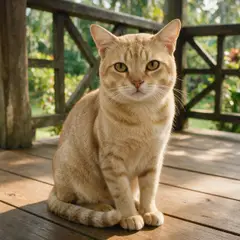
See the Ceylan in photos and videos: coat colors, size, and distinctive expressions.
Origins
## Where does it come from?
Native to Sri Lanka, the Ceylan was discovered in the early 1980s before being introduced to Europe during the same period. The breed is said to have developed from local cats, with an influence attributed to Felis chaus, then was registered by the international commission of the Fédération internationale féline in 1989. It remains today little known in Europe as in the United States.
Appearance
## What does it look like?
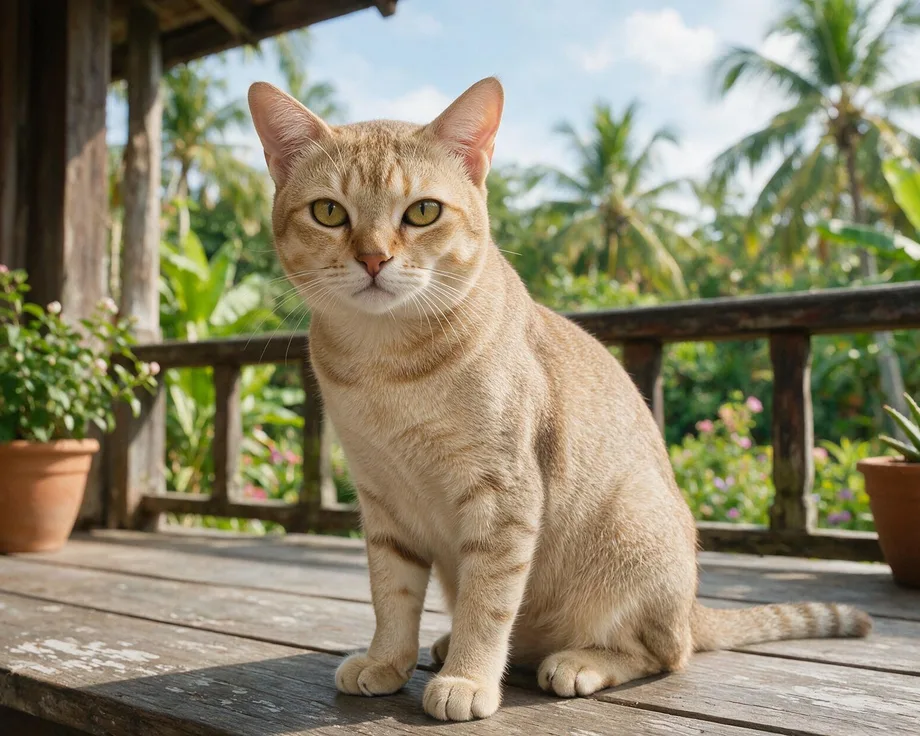
The Ceylan is a slender and muscular cat, supported by a fine bone structure and by hind legs a little longer than the front legs, which gives its gait a particular look. Its head shows round cheeks and a distinctive frontal pattern, its ears are large, its almond-shaped eyes on the upper part range from yellow to green, and its tail is relatively short, wide at the base then finer toward a rounded tip. Its coat is short, soft and silky, often ash-colored with black ticking and cinnamon or apricot highlights.
Temperament
## Temperament and personality
The Ceylan is a calm cat in its overall balance, but also lively, playful and very sociable. Affectionate without being intrusive, it appreciates the presence of its family, petting and moments of closeness. It generally cohabits very well with children and other animals.
Affectionate Playful Intelligent Easy to train Sociable
Living together
## Living with children and other pets
Originally a hunting cat, the Ceylon needs to burn off energy every day to stay comfortable in its paws. It likes to watch, play, explore and can retain a marked predatory instinct outdoors. In a house as in a well-appointed apartment, it readily enjoys a cat tree, games and regular stimulation.
Training
## Training and socialization
The Ceylon is easily tamed thanks to its intelligence, curiosity and closeness to humans. A gentle, consistent education based on repeating simple habits works well, provided that you also offer activities that channel its energy. Early socialization and environmental enrichment promote a well-balanced cat.
Budget
## Price and budget for the Ceylan
The Ceylan is a rare breed, which explains a limited supply and prices often higher than for more common cats. The acquisition cost must always be put into perspective with the seriousness of the breeding, health monitoring and long-term maintenance expenses.
[See cost breakdown](https://www.pedibase.com/en/cat-breed/ceylan/price)
Health
## Health at a glance
The Ceylan is generally considered a robust cat, with no major hereditary predisposition clearly highlighted in the available references. As with any cat, prevention is based on vaccination, regular veterinary follow-up and good hygiene and lifestyle.
[Prevention and things to watch for](https://www.pedibase.com/en/cat-breed/ceylan/health)
Nutrition
## Feeding your pet well
The Ceylan needs a diet rich in animal proteins and well balanced to support its muscle mass, its activity and its overall good condition. Good-quality kibble or a complete wet diet are suitable if they are chosen according to its age, its weight and its lifestyle.
[Our feeding advice](https://www.pedibase.com/en/cat-breed/ceylan/food)
Did you know?
## Fun facts and popularity
Still rare in Europe, the Ceylon is recognizable by its slender appearance, its typical frontal pattern and its warm shades that can recall cinnamon or apricot. Its name refers to the former name of Sri Lanka, from where it originates.
FAQ
## Frequently asked questions about the Ceylan
Answers to common questions from future owners before their new companion arrives.
### Can the Ceylon live in an apartment?
Yes, provided you have an enriched environment with a cat tree, toys, scratching posts, and daily interactions. Its need for activity remains significant even without access to the outdoors.
### Does the Ceylon get along well with children and other animals?
In general, yes. The Ceylon is described as sociable, playful, and not very fearful with other animals, provided introductions are gradual and respectful.
## Discover other breeds
[Abyssinian
](https://www.pedibase.com/en/cat-breed/abyssinian)
[Burmese
](https://www.pedibase.com/en/cat-breed/burmese)
[American Shorthair
](https://www.pedibase.com/en/cat-breed/american-shorthair)
[American Wirehair
](https://www.pedibase.com/en/cat-breed/american-wirehair)
[Russian Blue
](https://www.pedibase.com/en/cat-breed/russian-blue)
```json
{"@context":"https://schema.org","@graph":[{"@id":"https://www.pedibase.com/#website","@type":"WebSite","description":"Find dog and cat breeders near you. France's leading breeder directory, with an interactive map, breed information, and verified reviews.","inLanguage":"en","name":"Pedibase","url":"https://www.pedibase.com","potentialAction":[{"@type":"SearchAction","target":{"@type":"EntryPoint","urlTemplate":"https://www.pedibase.com/en/search?q={search_term_string}"},"query-input":"required name=search_term_string"}],"publisher":{"@id":"https://www.pedibase.com/#identity"},"translationOfWork":{"@id":"https://www.pedibase.com/#website"}},{"@id":"https://www.pedibase.com/en/cat-breed/ceylan#webpage","description":"Everything to know about the Ceylan (Sri Lanka): temperament, size, health, lifespan of 12-16 years, feeding, price, and verified breeders.","name":"Ceylan - temperament, price, health, breeders","url":"https://www.pedibase.com/en/cat-breed/ceylan","@type":["WebPage","FAQPage"],"breadcrumb":{"@id":"https://www.pedibase.com/en/cat-breed/ceylan#breadcrumb"},"isPartOf":{"@id":"https://www.pedibase.com/en#website"},"mainEntity":[{"@id":"https://www.pedibase.com/en/cat-breed/ceylan#/schema/question/1"},{"@id":"https://www.pedibase.com/en/cat-breed/ceylan#/schema/question/2"}],"potentialAction":[{"@type":"ReadAction","target":["https://www.pedibase.com/en/cat-breed/ceylan"]}],"primaryImageOfPage":{"@type":"ImageObject","url":"https://www.pedibase.com/_img/rs:fill:1200:630/el:1/q:80/f:jpg/plain/s3://media-pedibase/public/9551/ceylan.jpg","width":1200,"height":630,"inLanguage":"en","contentUrl":"https://www.pedibase.com/_img/rs:fill:1200:630/el:1/q:80/f:jpg/plain/s3://media-pedibase/public/9551/ceylan.jpg"}},{"@id":"https://www.pedibase.com/#identity","@type":"Organization","description":"Pedibase is a free directory of dog and cat breeders that helps prospective owners find a registered breeder near them.","email":"contact@pedibase.com","name":"Pedibase","url":"https://www.pedibase.com/","contactPoint":{"@type":"ContactPoint","contactType":"customer support","email":"contact@pedibase.com"},"logo":{"@id":"https://www.pedibase.com/#logo"},"parentOrganization":{"@type":"Organization","name":"Aurion","address":{"@type":"PostalAddress","streetAddress":"1 rue Pasteur","postalCode":"72000","addressLocality":"Le Mans","addressCountry":"FR"}},"sameAs":["https://www.facebook.com/pedibase","https://www.instagram.com/pedibase_app"]},{"@id":"https://www.pedibase.com/en/cat-breed/ceylan#breadcrumb","@type":"BreadcrumbList","itemListElement":[{"@type":"ListItem","name":"Home","item":"https://www.pedibase.com/en","position":1},{"@type":"ListItem","name":"Cats","item":"https://www.pedibase.com/en/cat-breeds","position":2},{"@type":"ListItem","name":"Ceylan","position":3}]},{"@id":"https://www.pedibase.com/en/cat-breed/ceylan#/schema/question/1","@type":"Question","inLanguage":"en","name":"Can the Ceylon live in an apartment?","acceptedAnswer":{"@type":"Answer","text":"Yes, provided you have an enriched environment with a cat tree, toys, scratching posts, and daily interactions. Its need for activity remains significant even without access to the outdoors."}},{"@id":"https://www.pedibase.com/en/cat-breed/ceylan#/schema/question/2","@type":"Question","inLanguage":"en","name":"Does the Ceylon get along well with children and other animals?","acceptedAnswer":{"@type":"Answer","text":"In general, yes. The Ceylon is described as sociable, playful, and not very fearful with other animals, provided introductions are gradual and respectful."}},{"@id":"https://www.pedibase.com/#logo","@type":"ImageObject","caption":"Pedibase","contentUrl":"https://www.pedibase.com/logo.svg","inLanguage":"en","url":"https://www.pedibase.com/logo.svg"}]}
```